

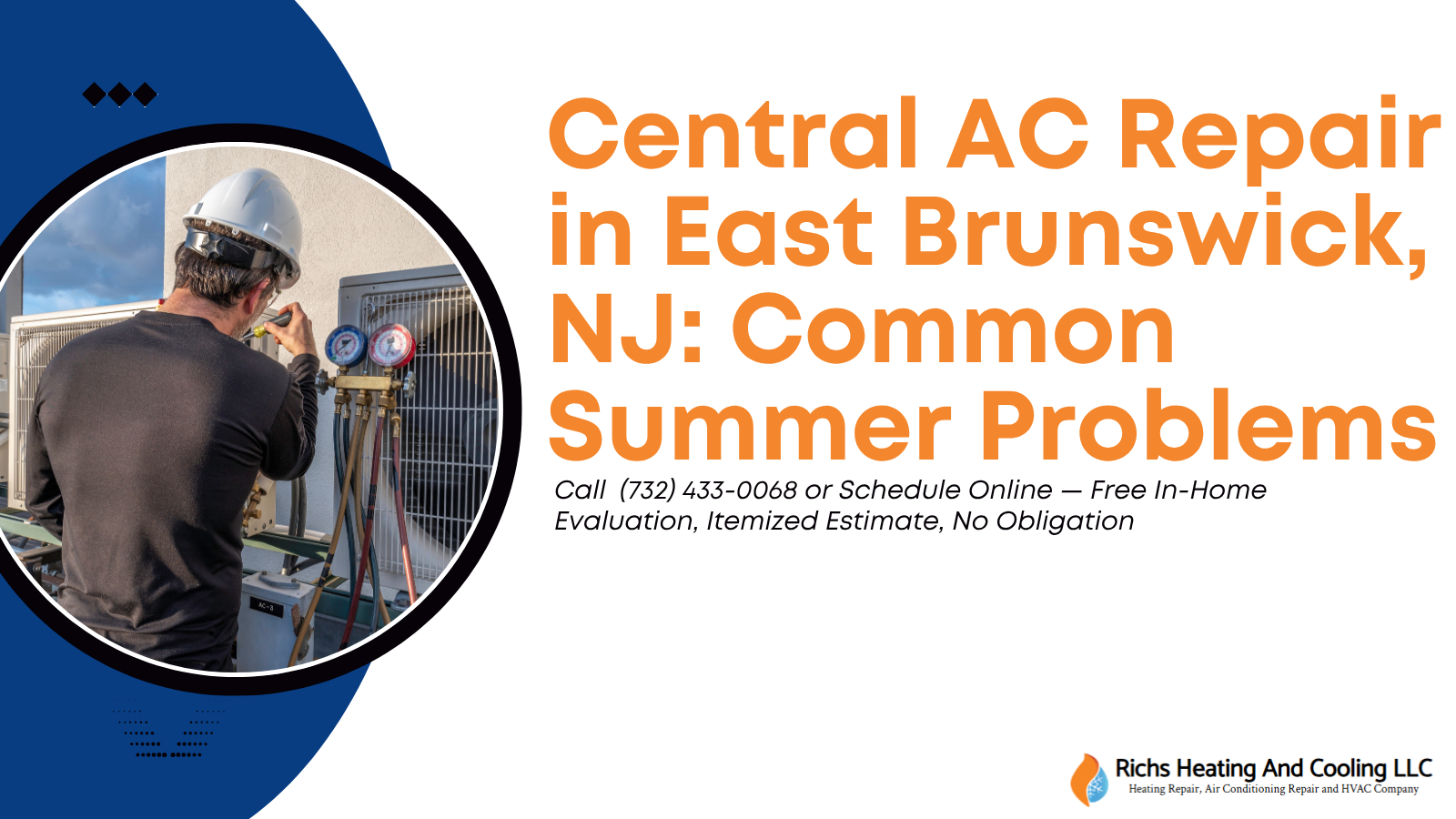
If your central AC is running but your East Brunswick home still feels warm, you're not imagining it — summer heat pushes aging or overworked AC systems past their limit, and problems that were minor in spring can turn into full breakdowns in July and August.
The most common culprits are dirty filters, low refrigerant, frozen evaporator coils, clogged condensate drains, and worn electrical components. Most of these issues are fixable with a fast, professional repair — but waiting too long can mean higher energy bills, more expensive repairs, or a system that fails completely during the hottest days of the year. If your AC is struggling, Rich's HVAC Experts can diagnose the problem quickly and get your home cooling again.
 Why Central AC Problems Show Up More in Summer
Central air conditioners are built to handle heat, but summer in East Brunswick puts real strain on even well-maintained systems. When temperatures climb into the 80s and 90s, an AC unit often runs for hours at a time instead of cycling on and off, and that extended runtime puts continuous pressure on parts that only get a light workout the rest of the year.
A few things happen during peak summer heat that make existing weaknesses more obvious:
Longer run cycles mean more wear on capacitors, motors, and electrical connections.
Higher indoor heat loads force the system to work harder to keep up, which can expose low refrigerant levels or airflow restrictions that weren't noticeable in cooler weather.
Outdoor condenser units work against higher ambient temperatures, reducing their ability to release heat efficiently.
Dust and debris buildup from months of use restricts airflow right when the system needs it most.
In short, summer doesn't usually cause AC problems — it reveals them. A dirty filter or slightly low refrigerant charge that caused a minor performance dip in May can turn into a system that can't keep a home cool at all once it's forced to run nonstop in July's heat and humidity.
Most Frequent Central AC Issues in East Brunswick Homes
Here are the summer AC problems East Brunswick homeowners run into most often, along with what causes them and what they usually mean for your system.
AC Blowing Warm Air
If air is coming out of the vents but it's not cold, the cause is usually one of a few things: low refrigerant from a leak, a failing compressor, or a dirty condenser coil that can't release heat properly. This is one of the most common summer service calls, and it almost always requires a licensed technician to diagnose safely, since refrigerant handling is regulated and compressor issues can be costly if ignored.
Weak Airflow From Vents
Weak or inconsistent airflow is often traced back to a clogged air filter, blocked return vents, or a failing blower motor. Reduced airflow forces the system to run longer to reach the same temperature, which increases energy use and accelerates wear on other components.
Frozen Evaporator Coil
A coil covered in ice usually points to restricted airflow, low refrigerant, or a dirty filter. Running the system with a frozen coil can damage the compressor over time, so it's a problem that needs attention rather than a wait-and-see approach.
Water Leaking Around the Indoor Unit
Water pooling near the indoor unit is typically caused by a clogged condensate drain line or a cracked drain pan. Left unaddressed, this can lead to water damage in the surrounding area, especially in homes with the unit installed in an attic or closet space.
AC Short Cycling
When a system turns on and off frequently without completing a full cooling cycle, it's often due to a refrigerant issue, an oversized unit, a failing thermostat, or electrical problems. Short cycling wastes energy and puts extra stress on the compressor.
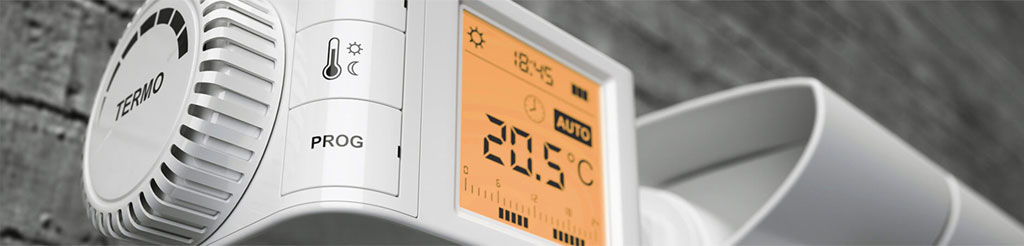
Thermostat Issues
Sometimes the AC unit itself is working fine, but a miscalibrated, poorly placed, or malfunctioning thermostat is sending the wrong signals. This can look like inconsistent temperatures, a system that won't turn on, or one that runs constantly.
Dirty Filters and Clogged Condensate Drains
These are two of the most preventable issues on this list. A dirty filter restricts airflow and strains the whole system, while a clogged drain line can cause water backup and even trigger a safety shutoff. Both are common in summer because the system is working harder and collecting more debris and condensation.
Refrigerant Problems and Electrical Failures
Low refrigerant (usually from a leak, not normal usage) and electrical issues like worn capacitors or failing relays are behind many of the more serious AC breakdowns. These aren't DIY fixes — they require a licensed technician to diagnose and repair safely.
 Signs You Need Repair Now
Some AC problems can wait a day or two for a scheduled appointment. Others shouldn't wait at all. Here's how to tell the difference.
Signs that mean it's time to call for repair:
The system is running constantly but never quite cools the house.
You notice warm air coming from the vents.
Airflow feels weak throughout the home, not just in one room.
Ice has formed on the indoor coil or refrigerant lines.
There's water pooling near the indoor unit or staining on the ceiling below an attic unit.
The system turns on and off in short bursts rather than completing full cooling cycles.
Energy bills have jumped without a clear reason.
You hear new noises — grinding, squealing, or clicking that wasn't there before.
Any one of these on its own is worth a service call. If you're noticing two or three at the same time, that's usually a sign the system is under real strain and getting close to a bigger failure.
What You Can Safely Check Before Calling
Before scheduling a repair, there are a few simple things East Brunswick homeowners can check on their own — no tools or HVAC experience required.
Check the air filter. A dirty filter is one of the most common causes of poor airflow and system strain. If it's visibly gray, clogged, or hasn't been changed in the last one to three months, replace it.
Check the thermostat settings. Make sure it's set to "cool," the temperature is set lower than the current room temperature, and the batteries (if applicable) aren't dead.
Check the outdoor condenser unit. Look for leaves, grass clippings, or debris blocking the unit, and clear at least a couple feet of space around it so it can release heat properly.
Check the circuit breaker. If the system isn't turning on at all, a tripped breaker is worth ruling out before assuming a bigger problem.
Check for a clogged condensate drain line. If you see water backing up near the indoor unit, the drain line may be blocked — this is often a quick fix for a technician but can cause damage if ignored.
What not to do: Don't attempt to open the condenser unit, add refrigerant, or work on electrical components yourself. These require specialized tools, safety precautions, and in most cases, an EPA-certified technician by law. If the basics above don't solve the problem, it's time to call a professional rather than troubleshoot further.
When AC Problems Become an Emergency
Most AC issues can be scheduled as a standard repair, but a few situations call for immediate attention — especially during a Central New Jersey heat wave.
Treat it as an emergency if:
The AC has stopped working completely during extreme heat, especially in a home with young children, elderly residents, or anyone with a health condition sensitive to heat.
You smell burning or notice smoke or sparks near the indoor or outdoor unit.
Water damage is actively spreading from a leak near the indoor unit.
The system won't turn off, or it's cycling on and off rapidly and continuously.
There's a strong chemical or refrigerant odor in the house.
In these situations, it's worth shutting the system off at the thermostat or breaker (if it's safe to do so) and calling for emergency service right away rather than waiting for a next-available appointment. Prolonged heat exposure indoors isn't just uncomfortable — it can become a genuine health risk during a summer heat wave.
 Why Local HVAC Repair Matters
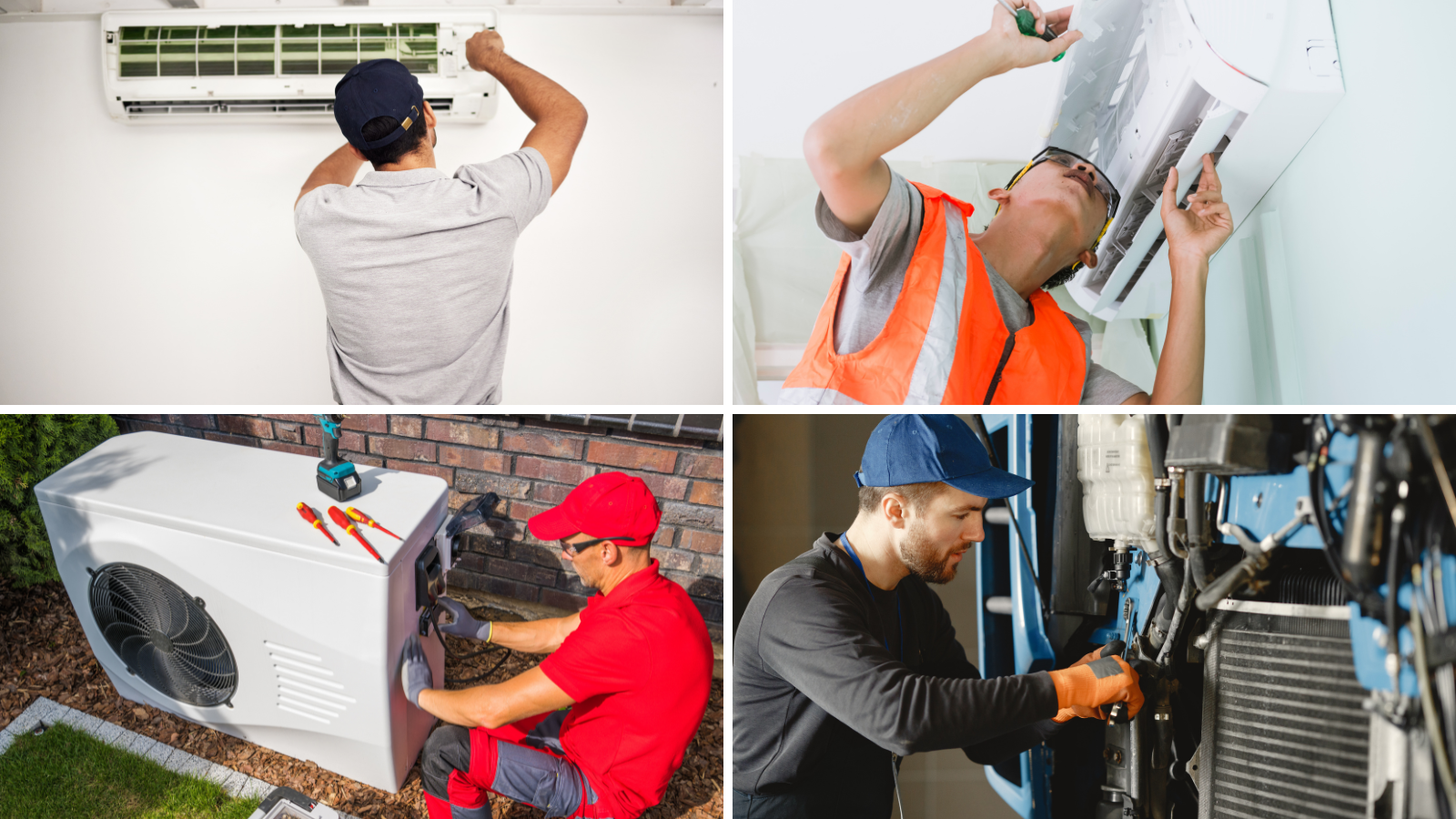
When your AC fails in the middle of a Central New Jersey summer, response time matters as much as expertise. A local East Brunswick HVAC company understands the specific challenges homeowners in this area face — from the humidity that Middlesex County summers bring, to the mix of older and newer home systems common throughout East Brunswick neighborhoods.
Working with a local technician also means:
Faster response times during peak summer demand, when AC companies across the region are booked solid.
Familiarity with local housing stock, including older systems that may need parts or approaches that differ from newer installations.
Accountability and reputation that come from serving the same community repeatedly, rather than a one-time regional dispatch.
Better scheduling flexibility for follow-up visits, maintenance, or warranty work, since the technician isn't traveling far to reach you.
For East Brunswick homeowners, choosing a local, established HVAC company means the difference between waiting days for a national chain to send someone out and getting a technician who already knows the area — and can often get to you the same day.
Schedule Central AC Repair with Rich's HVAC Experts
A struggling AC doesn't get better on its own — and in East Brunswick's summer heat, small problems can turn into full system failures faster than you'd expect. If your air conditioner is blowing warm air, freezing up, leaking water, or just can't keep up with the heat, it's time to get it checked out before it gets worse.
Rich's HVAC Experts provides fast, reliable central AC repair for homeowners throughout East Brunswick and the surrounding Middlesex County area. Our technicians will diagnose the issue, explain what's going on in plain language, and get your home cooling again — often the same day.
Don't wait for a full breakdown during the hottest days of the year. Contact Rich's HVAC Experts today to schedule your AC repair and get fast, dependable cooling relief.
Frequently Asked Question
Why is my AC running but not cooling?
This is usually caused by low refrigerant, a dirty condenser coil, or a failing compressor. The system is running, but it can't remove enough heat from your home's air. It's one of the most common summer service calls and typically requires a professional diagnosis to identify the exact cause.
Should I turn off my AC if it's freezing up?
Yes. If you notice ice on the coil or refrigerant lines, turn the system off and let it thaw completely — this can take several hours. Running the unit while it's frozen can damage the compressor, turning a moderate repair into a much more expensive one.
How often should I change my AC filter in the summer?
During peak summer use, check your filter monthly and replace it every 1–3 months, depending on usage, pets, and household dust levels. A clogged filter is one of the most common — and most preventable — causes of AC strain.
Why does my AC short cycle in hot weather?
Short cycling (turning on and off frequently without completing a full cooling cycle) is often caused by refrigerant issues, thermostat problems, or electrical faults. It's worth having a technician inspect the system, since short cycling accelerates wear on the compressor.
Is a water leak from my AC unit serious?
It can be. A leak is usually caused by a clogged condensate drain line or a cracked drain pan, and if left unaddressed, it can lead to water damage — especially in homes with the indoor unit installed in an attic or closet. It's best to have it checked before the leak spreads.
Do I need to replace my AC, or can it be repaired?
Most common summer issues — dirty filters, clogged drains, low refrigerant, thermostat problems — are repairable. Replacement usually only becomes necessary when the system is older (typically 12–15+ years), has had repeated major repairs, or the cost of repair approaches the cost of a new unit. A technician can help you weigh the options based on your specific system.
Comments