

It's 85°F outside, your AC has been running for hours, and your living room still feels sticky and suffocating. If this sounds familiar, you're not alone — this is one of the most common complaints from New Jersey homeowners every summer.
Here's the thing: an AC that's running isn't necessarily an AC that's cooling. In New Jersey's hot, humid climate, simply having your system on isn't enough. Dirty filters, leaky ductwork, low refrigerant, and the state's notoriously high summer humidity can all prevent your home from reaching a comfortable temperature — even when your unit is working overtime.
This guide breaks down the 5 most common reasons your AC keeps running but your house stays warm, with actionable fixes for each — so you know exactly what to check and when to call a professional.
 The Hidden Culprit: New Jersey's High Humidity
Most homeowners assume cooling is all their AC does — but in a state like New Jersey, moisture removal is just as important. Your AC has two jobs: lower the air temperature and pull humidity out of the air. When humidity levels are high, that second job becomes a serious burden on your system.
New Jersey summers regularly push indoor humidity above 60–70%, and at those levels, the air feels significantly warmer than the thermometer actually reads. That sticky, heavy feeling in your home isn't just discomfort — it's a sign your AC is struggling to keep up with the moisture load.
Signs high humidity is your problem:
The air feels "sticky" or heavy, not just warm
Windows fog or show condensation
Your home smells musty despite the AC running
The thermostat reads your target temperature, but the room still feels uncomfortable
How Humidity Overloads Your AC System
When humidity is excessive, two things happen that directly hurt your AC's performance:
Evaporator coils freeze up. Excess moisture in the air causes condensation to build on the coils faster than it can drain, eventually leading to ice buildup. A frozen coil can't absorb heat — which means your AC blows air but doesn't actually cool it.
Filters clog faster. In humid conditions, airborne dust and pollen stick together and accumulate on your filter much more quickly than in dry climates. A clogged filter restricts airflow, compounding the problem.
When your AC short-cycles — turning on and off in quick bursts rather than running full cooling cycles — it never runs long enough to pull meaningful moisture out of the air. The result is a home that stays warm and sticky no matter how long the system runs.
 5 Common Causes (and Fixes) When Your AC Runs but Your House Stays Warm
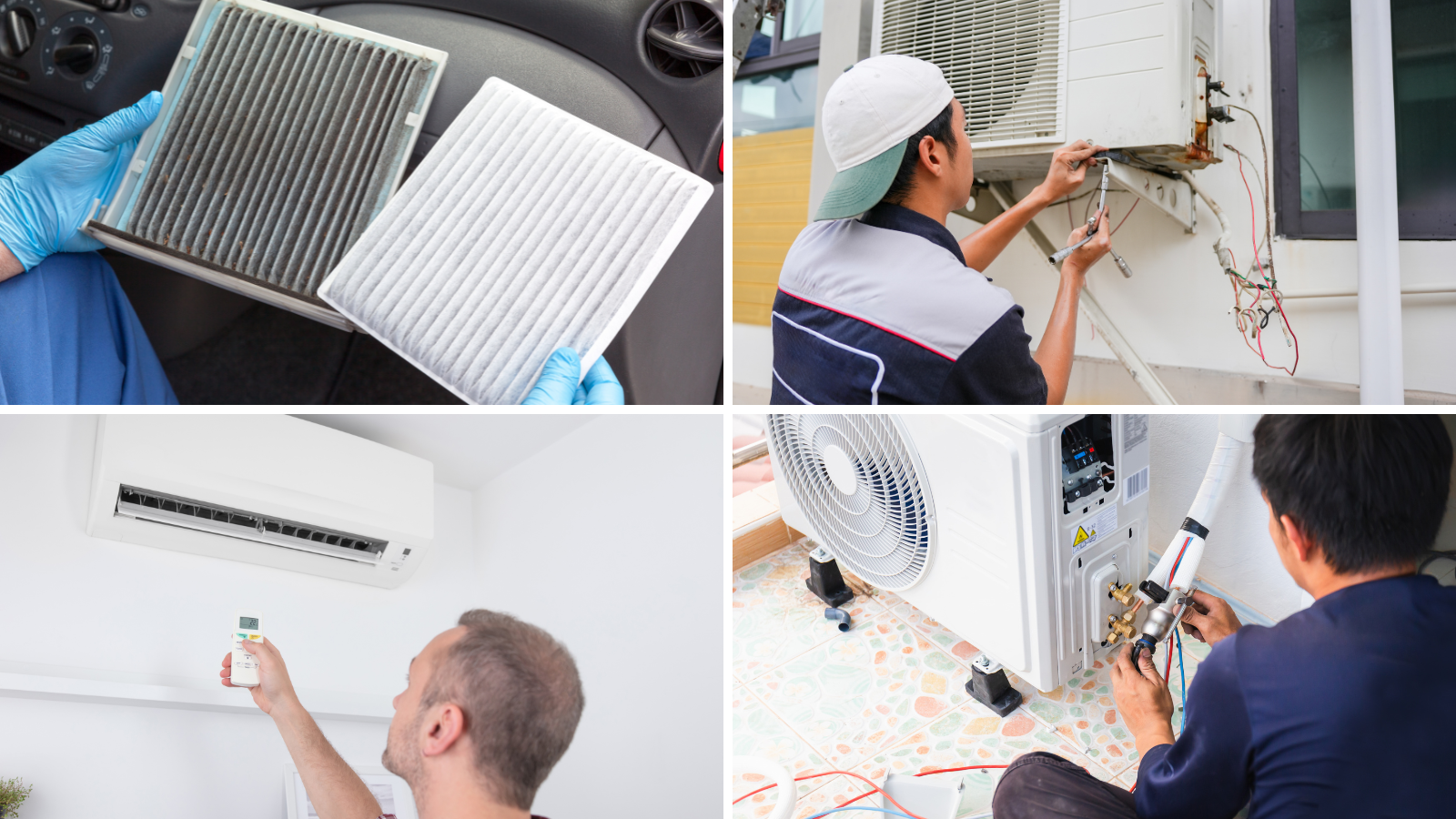
New Jersey's humid summers put extra stress on home cooling systems — and when something goes wrong, the AC often keeps running while comfort disappears. Here are the five most common culprits, and exactly what to do about each one.
1. Dirty Air Filter Restricting Airflow
The Problem: A clogged air filter is the most common — and most overlooked — reason an AC runs without cooling effectively. When the filter is blocked, airflow through the system drops dramatically, and your AC can't move enough conditioned air through your home.
Signs to Look For:
Weak or barely noticeable airflow from vents
AC unit freezing up
Energy bills climbing despite no change in usage
Rooms taking much longer than usual to cool down
Why It's Worse in New Jersey: NJ's summer air carries high pollen counts and humidity, which causes filters to clog significantly faster than in drier climates. A filter that might last 3 months in Arizona may need replacing every 4–6 weeks here.
DIY Fix: Check your filter first. If it's gray, matted, or visibly dirty — replace it immediately. For NJ homes, replace filters every 1–2 months during summer and use a MERV 8–11 rated filter for the best balance of airflow and filtration.
When to Call a Pro: If you replace the filter and airflow doesn't improve within 24 hours, the issue likely goes deeper — possibly a frozen coil or blower motor problem.
2. Low Refrigerant (Leak)
The Problem: Refrigerant is the substance your AC uses to absorb heat from indoor air and release it outside. When refrigerant levels drop due to a leak, your system loses its ability to cool — no matter how long it runs.
Signs to Look For:
Warm or room-temperature air blowing from vents
Hissing or bubbling sounds near the indoor or outdoor unit
Ice forming on the copper refrigerant lines
AC running constantly without reaching set temperature
DIY Check: You can't measure refrigerant levels yourself, but you can look for ice on the copper lines running to your indoor unit and listen for hissing sounds. Either is a strong indicator of a refrigerant leak.
When to Call a Pro: Always. Refrigerant handling is regulated by the EPA and requires certified technicians. Never attempt to add or handle refrigerant yourself. A pro will locate the leak, repair it, and recharge the system properly.
3. Frozen Evaporator Coil
The Problem: The evaporator coil absorbs heat from your indoor air. When airflow is restricted or refrigerant is low, the coil gets too cold and ice forms on its surface — blocking it from absorbing any heat at all. The result is an AC that runs continuously but does almost nothing.
Signs to Look For:
Visible ice on the indoor unit or refrigerant lines
Water pooling around the indoor unit as ice melts
Significantly reduced cooling despite the system running
Warm air coming from vents
Causes:
Dirty or clogged air filter
Blocked return air vents
Low refrigerant
Dirty evaporator coils
DIY Fix: Turn the AC off completely and switch the fan to ON to circulate air and melt the ice — this can take 2–24 hours. Once thawed, replace the air filter and check that all vents are open and unobstructed before restarting.
When to Call a Pro: If ice returns within 24 hours of restarting, the underlying cause — low refrigerant or a dirty coil — needs professional attention.
4. Leaky or Undersized Ductwork
The Problem: Your ductwork is the delivery system for all the cool air your AC produces. If ducts are leaking, poorly sealed, or undersized for your home, a significant portion of that conditioned air never reaches your living spaces — it escapes into walls, attics, or crawl spaces instead.
Signs to Look For:
Noticeable hot and cold spots between rooms
Upper floors significantly warmer than lower floors
Weak airflow from certain vents
High energy bills despite moderate thermostat settings
NJ Context: Many New Jersey homes — particularly those built before the 1980s — have ductwork that was never properly sized or has degraded over decades. This is one of the most under-diagnosed causes of poor AC performance in the region.
DIY Check: Inspect any visible ductwork in your basement, attic, or utility areas. Look for disconnected sections, obvious gaps, or ducts that have pulled apart at the joints. You can temporarily seal small gaps with metal-backed tape (not standard duct tape, which degrades quickly).
When to Call a Pro: Duct balancing, comprehensive sealing, and replacement require a professional assessment. A technician can perform a duct leakage test to measure exactly how much conditioned air you're losing.
5. Dirty Condenser Coils (Outdoor Unit)
The Problem: The outdoor condenser unit releases the heat your AC pulls from inside your home. When the condenser coils are coated in dirt, debris, or organic buildup, they can't release heat efficiently — causing your system to work harder and cool less effectively.
Signs to Look For:
AC running constantly but house temperature barely dropping
Outdoor unit feels excessively hot to the touch
Higher than usual energy bills
Fan running but system not cooling
Causes:
Leaves, grass clippings, and debris accumulating on or around the unit
Dirt and grime coating the coil fins over time
Shrubs or structures blocking airflow around the unit
DIY Fix: Turn off power to the unit at the disconnect box. Remove any visible debris by hand, then gently rinse the coil fins with a garden hose — spray from the inside out if possible. Make sure at least 2 feet of clearance exists around all sides of the unit.
When to Call a Pro: If the coils appear heavily corroded, the fan motor isn't running, or the unit still underperforms after cleaning, call a technician. Corroded coils and motor issues require professional repair or replacement.
 Immediate DIY Troubleshooting Checklist for New Jersey Homeowners
Before calling a technician, run through these five quick checks. In many cases, one of these steps will identify — or even resolve — the problem on the spot.
Check and replace your air filter (5 minutes) Pull the filter out and hold it up to the light. If you can't see light through it, replace it immediately. During NJ summers, plan to check it every 4–6 weeks.
Verify your thermostat settings (2 minutes) Confirm it's set to COOL (not FAN ONLY), AUTO fan mode, and that the target temperature is actually lower than the current room temperature. A simple setting error is more common than you'd think.
Inspect and clean the outdoor unit (15 minutes) Walk outside and check your condenser unit. Clear away any leaves, grass, or debris from around the unit. If the coil fins look dirty, rinse them gently with a garden hose after turning off the power at the disconnect box.
Check for ice on the indoor unit or refrigerant lines (5 minutes) Look at the copper lines running into your indoor unit. Any frost or ice buildup is a red flag. If you find ice, turn the system off and let it thaw completely before restarting.
Listen for unusual noises (2 minutes) With the system running, listen carefully at both the indoor and outdoor units. Hissing suggests a refrigerant leak. Grinding or squealing points to a mechanical issue. Buzzing may indicate an electrical problem. Any of these warrants a professional call.
Important: If you complete all five steps and your home still isn't cooling properly within 24 hours, stop troubleshooting and schedule a professional HVAC inspection. Continuing to run a struggling system can cause additional damage and more costly repairs.
Comments