

New Jersey winters rarely stay put. Temperatures can swing from the low 20s to the high 40s within the same week, and that unpredictability puts real pressure on whatever system is heating your home. Choosing between a furnace and a heat pump affects more than just comfort. It shapes your monthly bills, your home's resale value, and how well you're prepared for the next cold snap.
There's no single "best" system for every New Jersey home. The right choice depends on your home's insulation, whether you already have ductwork and gas service, and how you weigh upfront cost against long-term savings.
Rich's Heating and Cooling has helped homeowners in Dunellen and across Central New Jersey navigate this decision since 2005. In this guide, we'll compare furnaces and heat pumps on efficiency, cost, cold-weather performance, and 2026 rebates, so you can make the right call for your home.
 Why Pipes Freeze (and Why They Burst)
Water is one of the few substances that expands as it freezes, and that simple fact is what makes winter so hard on plumbing. When water inside a pipe turns to ice, it pushes outward against the pipe walls, building pressure with nowhere to go. That pressure doesn't need to build at the frozen spot itself; it often causes a rupture somewhere else along the line where the pipe is weakest. Understanding this process makes it much easier to see why certain areas of a home are so much more vulnerable than others.
The pipes most at risk are the ones with the least protection from indoor heat. This includes lines running through exterior walls, as well as those in unheated spaces like attics, basements, crawl spaces, and garages. Under-sink cabinets located on exterior walls are another common trouble spot, since they're often cut off from the home's warm air circulation.
Somerset County's climate makes this a genuine seasonal concern rather than a rare fluke. With January lows averaging around 20 to 21°F and consistent annual snowfall, local homes see real stretches of hard freeze most winters. That combination of cold snaps and vulnerable pipe locations is exactly why a proactive prevention plan matters so much here.
New Jersey's Climate: What Your Heating System Must Handle
New Jersey sits in ASHRAE Climate Zone 4A, a mixed-humid zone that racks up roughly 4,700 heating degree days and 1,100 cooling degree days each year. New Jersey sits in ASHRAE Climate Zone 4A, a mixed-humid zone that racks up roughly 4,700 heating degree days and 1,100 cooling degree days each year, according to NJDEP climate data. The average winter temperature across the state hovers around 33°F, though that number shifts by region. Newark sees January lows averaging around 27°F, while Bergen and Morris counties dip closer to 22°F. Most winter days actually fall in that 25–35°F range, which matters more than you might think when comparing heating systems.
That 25–35°F range happens to be a sweet spot for heat pumps, which can run at 300–400% efficiency in those conditions. Extreme cold snaps below 10°F are rare and typically short-lived in NJ.
Modern cold-climate heat pumps are built for exactly this kind of winter. They maintain 70–80% of their heating capacity even at -13°F, which covers the vast majority of what New Jersey throws at them.
The takeaway here isn't that one system beats the other outright. It's that both furnaces and heat pumps can perform well in NJ, but how well depends heavily on the temperature range they're actually working in.
How Furnaces Work (And Why They're Still Popular in NJ)
Furnaces have been the default heating choice in New Jersey for decades, and for good reason. They burn a fuel source, most commonly natural gas, to generate heat, then use a blower to push that warm air through your home's ductwork. Because so many NJ homes already have gas lines and ducts in place, furnaces remain a practical, low-friction option for replacement. Their efficiency is measured using a rating called AFUE, which tells you how much of the fuel you're paying for actually turns into usable heat.
Furnace Basics: Combustion Heating Explained
A furnace works by burning fuel, usually natural gas, propane, or oil, inside a combustion chamber. That heat is transferred to a heat exchanger, which warms the air that a blower then circulates through your ductwork. The entire process is measured by AFUE, or Annual Fuel Utilization Efficiency
AFUE Ratings: 80% vs. 90% vs. 96% vs. 98%
Furnace efficiency comes in several tiers, and the difference between them adds up over the life of the system. An 80% AFUE furnace is non-condensing and wastes about 20 cents of every fuel dollar, making it the federal baseline rather than a smart long-term pick. Moving up to 90–92% AFUE gets you entry-level condensing technology and PVC venting, typically for $800–$1,500 more than an 80% unit. For most NJ homes, 95–96% AFUE hits the sweet spot, pairing a two-stage burner and ECM blower with strong ROI given the state's typical winter temperatures.
•80% AFUE: federal minimum, non-condensing
•90–92% AFUE: entry condensing, +$800–$1,500 over baseline
•95–96% AFUE: two-stage burner, best ROI for NJ climate
•97–98.5% AFUE: modulating, variable-speed, +$2,500–$4,000 premium
Furnace Pros & Cons for New Jersey Homes
Furnaces earn their popularity through consistency. They deliver steady heat even when temperatures drop well below zero, and natural gas remains significantly cheaper per unit than electricity in New Jersey. There's no defrost cycle to worry about, and warm-up time is fast compared to other systems. The tradeoff is that furnaces only heat, so you'll still need a separate AC system for summer.
Pros:
•Reliable heat output even in extreme cold
•Lower operating cost due to cheap natural gas
•Fast warm-up, no defrost cycles
•Compatible with existing ductwork in most NJ homes
Cons:
•Higher carbon emissions from combustion
•No cooling function on its own
•Efficiency caps out around 98%
•Requires annual maintenance and carbon monoxide monitoring
Ideal for: homes with existing gas lines and ductwork, homeowners prioritizing the lowest possible monthly heating bill, and older or less-insulated homes that need consistent, high-output heat. See our furnace installation page for system options
 How Heat Pumps Work (And Why They're Gaining Ground in NJ)
Heat pumps take a fundamentally different approach to heating than furnaces do. Instead of burning fuel to create heat, they extract existing heat from the outdoor air, even when it's cold out, and move it inside using refrigerant. That same system runs in reverse during summer, which means one unit handles both heating and cooling. Their efficiency is measured differently than a furnace's, using HSPF2 for heating performance and SEER2 for cooling.
Heat Pump Basics: Moving Heat, Not Creating It
Rather than generating heat through combustion, a heat pump pulls heat from outdoor air, even air as cold as -22°F, and transfers it indoors. Because it's a reversible system, the same equipment provides air conditioning in summer. This dual function is part of what makes heat pumps appealing for homeowners looking to consolidate two systems into one.
Cold-Climate Heat Pumps: Game-Changer for NJ Winters
Standard heat pumps start losing efficiency once temperatures drop below 25–30°F, which used to be a real limitation in a state like New Jersey. Cold-climate heat pumps (CCHPs) solve this by maintaining their rated output down to -13°F, verified by NEEP testing standards. Cold-climate heat pumps (CCHPs) solve this by maintaining their rated output down to -13°F, verified by NEEP's cold-climate heat pump specifications. These units use inverter-driven compressors, which prevent the abrupt "blast-then-chill" temperature swings older heat pumps were known for.
•Standard heat pumps: lose efficiency below 25–30°F
•Cold-climate models: maintain output to -13°F
•NEEP-verified COP of ~1.9 at 5°F
•Inverter-driven compressors prevent temperature swings
HSPF2 & SEER2 Ratings: What to Look For in 2026
These ratings tell you how efficiently a heat pump converts electricity into heating and cooling. For NJ rebate eligibility, the minimum tier requires a SEER2 of at least 15.2 and HSPF2 of at least 7.8. Cold-climate tier units need to hit HSPF2 of 8.1 or higher, with a COP of at least 1.75 at 5°F. For homeowners chasing the best long-term performance, aiming for HSPF2 of 9.0 or above is a smart target. For homeowners chasing the best long-term performance, ENERGY STAR recommends aiming for HSPF2 of 9.0 or above as a smart target.
Heat Pump Pros & Cons for New Jersey Homes
The biggest draw of a heat pump is efficiency: in NJ's typical 25–35°F winter range, these systems can run at 300–400% efficiency. That efficiency, combined with rebates that can reach $11,500 when stacked, often narrows the cost gap with furnaces more than homeowners expec]. Heat pumps also run quieter than combustion systems and produce no combustion byproducts. The main downside is a higher upfront cost and, in some cases, the need for backup heat during extreme cold snaps.
Pros:
•300–400% efficiency in typical NJ winter temps
•Heating and cooling in a single system
•Lower carbon footprint, especially with solar
•Eligible for up to $11,500 in combined rebates
•Quieter operation, no combustion byproducts
Cons:
•Higher upfront cost than a basic furnace
•Operating cost can run higher than gas depending on rates
•May need backup heat for extreme cold snaps
•Performance depends heavily on correct sizing and installation
Ideal for: homes without existing gas service, moderately insulated homes, homeowners wanting to eliminate a separate AC unit, and anyone prioritizing rebates or lower emissions. Learn more on our heat pump services page.
Head-to-Head Comparison: Furnace vs. Heat Pump in NJ
Numbers make this decision easier than opinions do. The table below lines up a high-efficiency gas furnace against a cold-climate heat pump across the factors that matter most to NJ homeowners: efficiency, cost, lifespan, and rebate eligibility.
The pattern that emerges is straightforward. Furnaces win on upfront simplicity and cold-weather muscle, while heat pumps win on year-round versatility and incentive value.
 The Hybrid Solution: Dual-Fuel (Furnace + Heat Pump) Systems
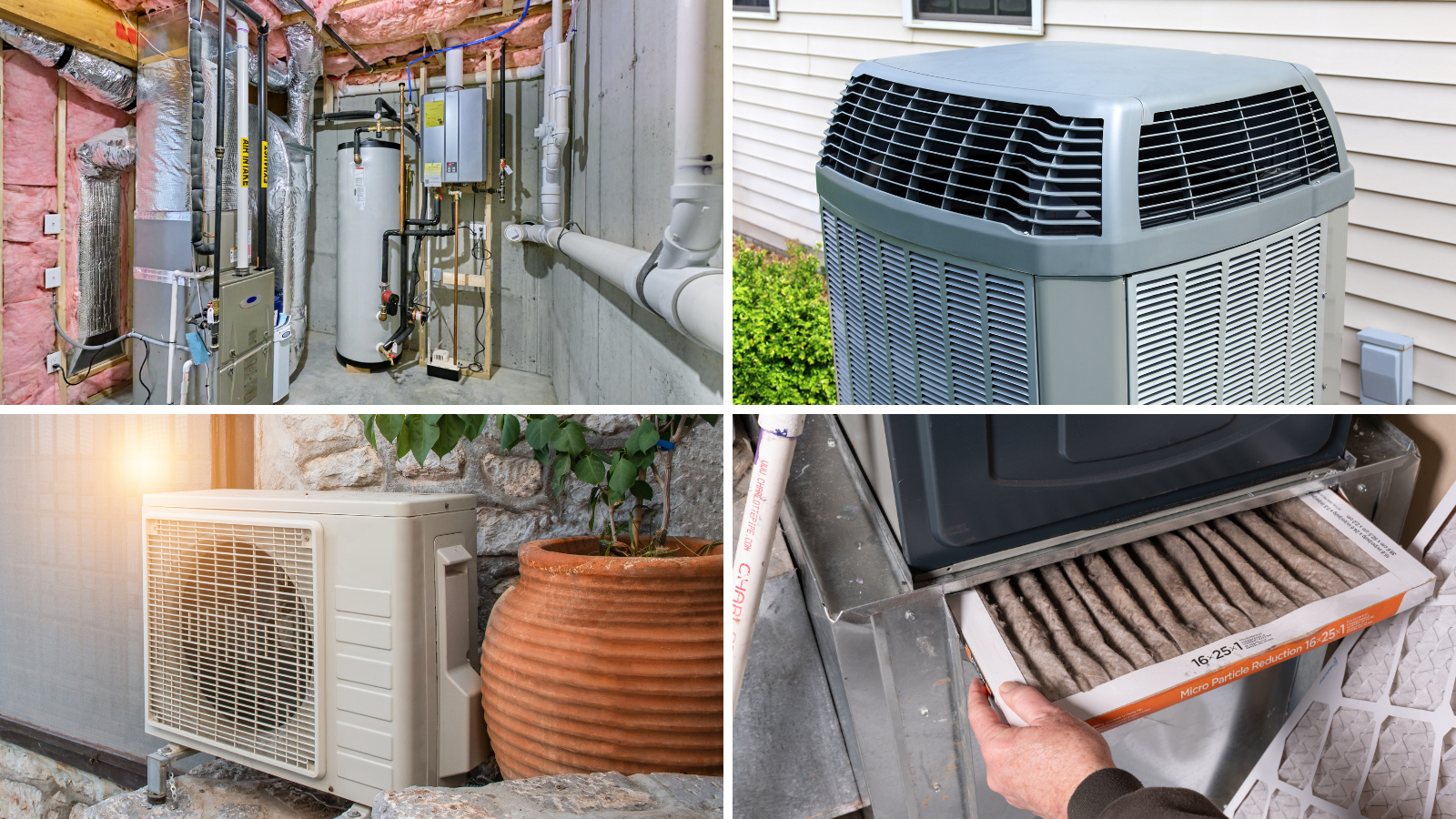
Dual-fuel systems offer a middle path for homeowners who don't want to choose one technology outright. This setup pairs a heat pump with a gas furnace, letting the heat pump handle the bulk of the season while the furnace steps in only when temperatures drop into extreme territory. It's a way to capture the efficiency and rebate advantages of a heat pump without giving up the cold-weather reliability of gas backup. For NJ homeowners who already have a furnace and gas line, it's often the least disruptive way to start electrifying.
The logic behind dual-fuel is simple: use cheap electricity for most of the winter, and switch to gas only on the coldest days when a heat pump would otherwise struggle. This keeps operating costs down while still cutting overall emissions compared to a furnace-only setup.
To qualify for NJ rebates, the heat pump half of the system needs to meet specific minimums, typically SEER2 of at least 15.2, EER2 of at least 12.0, and HSPF2 of at least 7.5. Installed cost for a dual-fuel system typically runs $8,000–$12,000, depending on capacity and brand.
Ideal for: homeowners with an existing gas furnace who want to reduce their carbon footprint and operating costs without fully electrifying their home.
Real-World Cost Breakdown: What NJ Homeowners Actually Pay
Sticker prices only tell part of the story when comparing heating systems. What matters more is the full picture: installation cost, what you'll pay to run the system each year, and how much rebates can bring the real cost down. Below is a breakdown of what NJ homeowners can expect to pay in 2026 across the most common system types.
Upfront Installation Costs (2026 NJ Averages)
•Gas furnace (95% AFUE): $4,600–$7,800 cost range]
•Air-source heat pump: $4,000–$8,000 cost range]
•Ductless mini-split (per zone): $3,000–$11,000 cost range]
•Geothermal heat pump: $15,000–$30,000 cost range]
•Dual-fuel system: $8,000–$12,000 cost range]
Annual Operating Costs (Based on NJ Energy Rates)
Running costs tend to surprise homeowners more than installation costs do, since they compound every year the system is in use. A gas furnace typically runs $1,200–$1,800 per year depending on home size and insulation levels figures]. A heat pump running on electricity alone, with no backup heat, tends to land lower, around $800–$1,100 per year figures]. The catch is that this comparison flips depending on what you're replacing: heat pump savings are most dramatic against oil or electric resistance heat, while a furnace usually still wins head-to-head against a heat pump if you're already on gas.
Rebates & Incentives (2026 Update)
Rebates can meaningfully change the math, especially for heat pumps. New Jersey's Whole Home Heat Pump Rebate offers up to $7,500, structured as a $2,000 base plus $200 per efficiency point rebate structur]. PSE&G adds up to $900 for cold-climate heat pumps, and JCP&L offers up to $1,000 for qualifying cold-climate models utility rebate amounts. PSE&G adds up to $900 for cold-climate heat pumps, and JCP&L offers up to $1,000 for qualifying cold-climate models. It's worth noting that the federal 25C tax credit expired December 31, 2025, so it's no longer available for 2026 installations expiration date.
•NJ Whole Home Heat Pump Rebate: up to $7,500
•PSE&G rebate: up to $900
•JCP&L rebate: up to $1,000
•Federal 25C credit: expired, not available in 2026
•Total potential stacked rebates: up to $11,500 total]
Rebates typically require pre-approval and a certified installer, so paperwork matters as much as equipment choice. Rich's Heating and Cooling handles this process directly for customers to make sure nothing falls through the cracks.
Decision Framework: Which System Is Right for YOUR Home?
Every home is different, and the right heating system usually comes down to a handful of key factors rather than one universal answer. The questions below walk through the same logic Rich's technicians use when evaluating a home in person. Working through them in order should point you toward the system that fits your situation best. If you're still unsure after going through them, that's exactly what a free consultation is for.
1. Do you have existing natural gas service and ductwork?
•Yes → a furnace or dual-fuel system is likely most cost-effective.
•No → a heat pump (air-source or ductless) is the better fit.
2. What's your priority: lowest monthly bills or lowest carbon footprint?
•Monthly bills → gas furnace (95–96% AFUE).
•Carbon footprint → heat pump, especially paired with solar.
3. How old or well-insulated is your home?
•Older, drafty home → a furnace provides more consistent heat output.
•Well-insulated, air-sealed home → a heat pump will run efficiently.
4. Do you need cooling too?
•Yes → a heat pump saves you from buying a separate AC system.
•No → a furnace, paired with AC only if needed.
5. Are you trying to maximize rebates?
•Yes → a heat pump qualifies for up to $11,500 in 2026 rebates figure].
•No → a furnace may still win on lower upfront cost.
6. What's your budget?
•Tight budget → a 90–92% AFUE furnace or Tier 1 heat pump cost ranges].
•Flexible budget → a 95–96% AFUE furnace or cold-climate heat pump with rebates applied.
Common Myths Debunked
Misinformation about heat pumps runs deep in New Jersey, often based on outdated technology from a decade or two ago. Many homeowners rule out heat pumps entirely because of things they've heard rather than how modern cold-climate units actually perform. Some of these myths carry a grain of truth for older equipment, but they don't hold up against 2026 technology. Below are the most common ones worth clearing up before you make a decision.
Myth 1: "Heat pumps don't work in NJ winters."
Fact: Modern cold-climate heat pumps maintain 70–80% capacity at -13°F and handle roughly 96% of NJ winter hours without needing backup heat 96% figure].
Myth 2: "Furnaces are always cheaper to operate."
Fact: That's true if you're already on gas, but heat pumps can save $550–$750 per year total when they're replacing both a furnace and a separate AC unit savings figure].
Myth 3: "Heat pumps are too expensive upfront."
Fact: After stacking available rebates, which can reach $11,500, the net cost of a heat pump can end up lower than a high-efficiency furnace rebate total].
Myth 4: "You need a furnace backup for heat pumps."
Fact: Backup is really only necessary for extreme cold snaps below 5°F, which are rare in New Jersey, and most homes do fine with a properly sized cold-climate unit.
Maintenance & Longevity: What to Expect
How long your system lasts, and how well it performs along the way, depends heavily on consistent maintenance. Furnaces and heat pumps have different maintenance needs and different failure points, so it helps to know what you're signing up for with each. Neither system is "maintenance-free," but neither requires excessive upkeep either if you stay on a regular schedule. Here's what to expect from each over their typical lifespan.
Furnace:
•Lifespan: 15–20 years
•Maintenance: annual tune-up ($80–$150), filter changes every 1–3 months, carbon monoxide detector checks cost range]
•Common issues: cracked heat exchanger, blower motor failure, ignition problems
Heat Pump:
•Lifespan: 12–15 years (outdoor unit), 20+ years (indoor air handler)
•Maintenance: annual inspection ($100–$200), filter changes, outdoor coil cleaning, refrigerant level checks cost range]
•Common issues: defrost cycle malfunctions, compressor wear, refrigerant leaks
Rich's Heating and Cooling offers maintenance plans built to extend system life and catch small issues before they become costly repairs. Staying ahead of maintenance is one of the simplest ways to protect whichever system you choose — our maintenance plans are built to make that easy.
Next Steps: Get a Free, No-Obligation Quote from Rich's Heating and Cooling
Deciding between a furnace and a heat pump doesn't have to be a guessing game. Rich's Heating and Cooling has served Dunellen and Central New Jersey since 2005, and we'll give you a straight answer based on your home's actual insulation, ductwork, and heating needs, not a one-size-fits-all recommendation. Whether that means a furnace, a heat pump, or a dual-fuel system, we'll walk you through the tradeoffs before you commit to anything. Mention this article when you reach out and we'll include a complimentary system sizing analysis with your consultation.
Call (732) 433-0068 or fill out our online form to schedule your free consultation.
Comments