

Adding a new room to your New Jersey home is exciting, but it often comes with an HVAC headache nobody warned you about. Your existing furnace and central air system were sized and designed for the home's original footprint, not the sunroom, finished basement, or bonus bedroom you just added. That mismatch shows up fast — the new space runs too hot in summer, too cold in winter, or never quite matches the comfort level of the rest of the house. For homeowners who just invested in a major renovation, that kind of inconsistent comfort can feel like an unfinished job.
This is where ductless mini-splits come in. Rather than forcing your existing system to stretch further than it was built for, a mini-split delivers heating and cooling directly to the new space through its own dedicated unit. There's no need to tear into walls or ceilings to run new ductwork, which keeps installation fast and far less invasive than extending central air. For NJ homeowners looking for a practical, energy-efficient way to condition an addition, mini-splits offer a level of control and reliability that retrofitted ductwork often can't match.
 Why Home Additions Often Need a Different HVAC Solution
Most central HVAC systems are designed around the exact square footage and layout of a home at the time it was built, which means they rarely have extra capacity built in for future expansion. When you add a room, your existing system suddenly has to condition more space than it was engineered for, and that strain doesn't always show up as an obvious problem right away. Instead, it shows up as uneven temperatures, weak airflow in the new room, or a furnace and AC unit that run longer and harder than they should. For older NJ homes especially, connecting a new addition to the existing ductwork can mean cutting into walls, floors, or ceilings — an invasive and often expensive process.
• Airflow imbalance between the addition and the rest of the house
• Uneven temperatures that make the new room noticeably less comfortable
• Undersized systems working overtime to keep up with added square footage
• Costly, invasive construction required to extend existing ductwork
• Older homes with no existing ductwork to tie into at all
What Makes Ductless Mini-Splits a Smart Fit
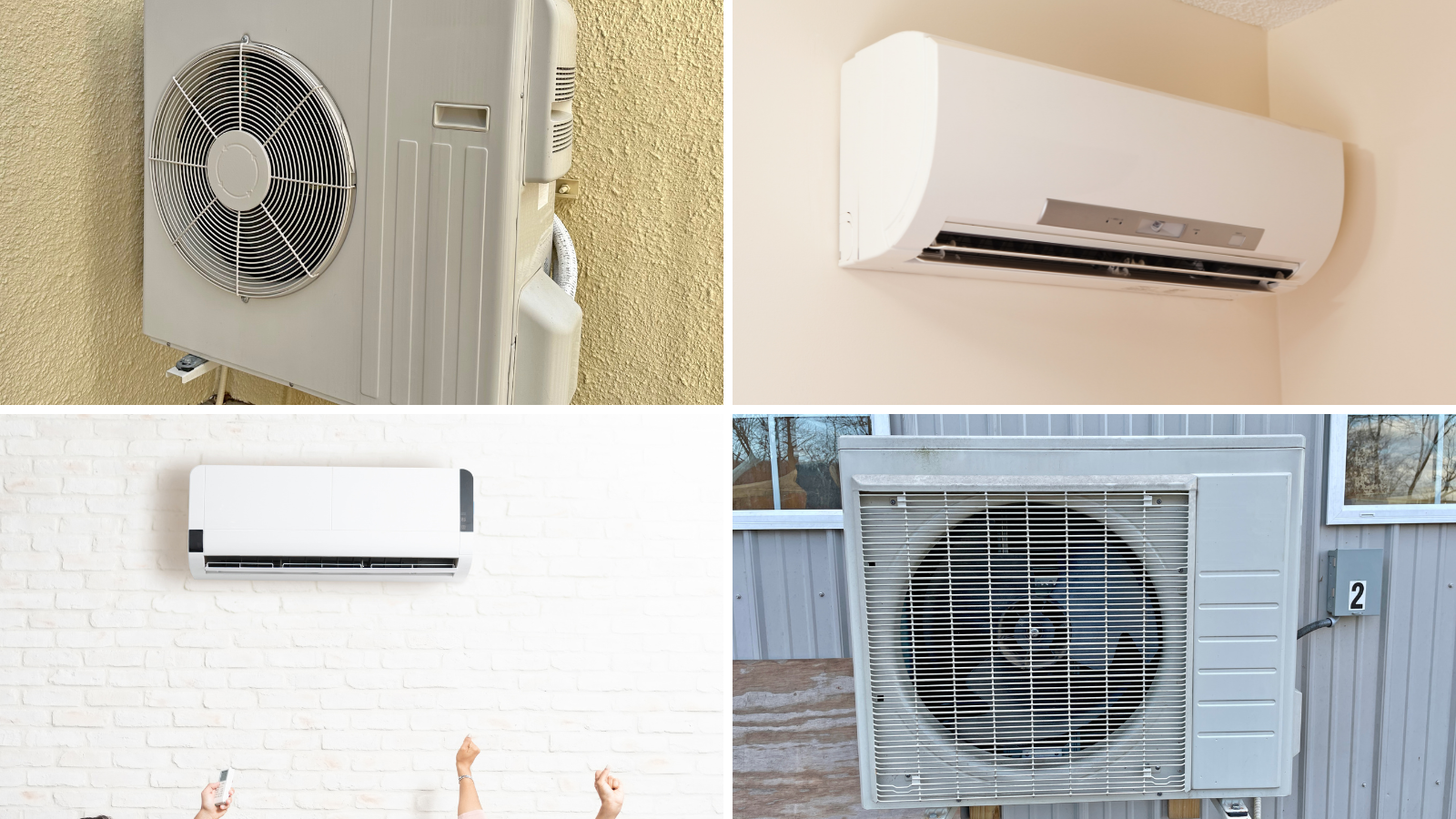
A ductless mini-split system consists of two main parts: an outdoor condenser unit and one or more indoor air handlers, connected by a small conduit rather than a network of ducts. Each indoor unit mounts directly in the room it serves, delivering conditioned air straight to that space without relying on your home's existing duct system at all. Homeowners weighing brands often compare performance and reliability between the two leading manufacturers — for a closer look, see our breakdown of Mitsubishi vs. Daikin mini-split systems.
This makes mini-splits a natural fit for additions, since the new room gets its own dedicated comfort system instead of competing for airflow with the rest of the house. Modern mini-splits also function as heat pumps, meaning the same unit provides both heating and cooling — a real advantage for New Jersey homeowners who deal with hot, humid summers and cold winters in the same year.
• Outdoor condenser paired with one or more indoor air handlers
• No connection to existing ductwork required
• Small conduit run instead of invasive duct installation
• Heats and cools from the same unit, year-round
• Room-by-room conditioning independent of the rest of the home
Benefits for New Jersey Homeowners
Ductless mini-splits offer a combination of practical and financial advantages that make them especially well-suited to NJ additions. Because installation doesn't require tearing into walls or ceilings to run new ductwork, the process is faster and far less disruptive to your home and daily routine.
Mini-splits also tend to be more energy-efficient than extending central air, since traditional duct systems can lose a significant amount of conditioned air through leaks and poor insulation before it ever reaches the room. According to the U.S. Department of Energy, duct losses can account for more than 30% of a home's energy use for heating and cooling, which is a major reason ductless systems consistently outperform extended ductwork on efficiency. For homeowners who've just finished a renovation, that efficiency translates directly into lower monthly utility costs and a faster return on the investment.
• No ductwork required — installation is quicker and less invasive than extending central air
• Zoned comfort — the new room gets its own temperature settings, independent of the rest of the house
• Energy efficiency — no duct losses mean less wasted conditioned air and lower utility bills
• Better fit for hard-to-condition spaces — ideal for additions, basements, sunrooms, garages, and attic conversions
• Year-round performance — heats and cools effectively through NJ's hot summers and cold winters
• Quiet operation — a noticeable upgrade in comfort over portable or window units
 Where Mini-Splits Work Best in Additions
Ductless mini-splits are versatile enough to handle almost any type of addition or converted space, which is part of why they've become such a popular choice among NJ homeowners. Because each indoor unit operates independently, a mini-split can condition a single new room just as effectively as it can serve a larger multi-room expansion with multiple zones. This flexibility makes them a strong option whether you're finishing a long-neglected space or building something brand new from the ground up. If your addition is a converted garage or bonus living space, our residential heat pump services page covers how we size and install systems for these exact scenarios. The following spaces tend to be the best candidates for a ductless system:
• Room additions built onto the main structure
• Sunrooms exposed to significant heat gain or loss
• Finished basements with no existing ductwork
• Garage conversions turned into living space
• Attic bedrooms with limited access for traditional ducts
• Bonus rooms or in-law suites requiring independent temperature control
Mini-Splits vs. Extending Central HVAC
When homeowners plan an addition, extending the existing central HVAC system often seems like the simplest option — but it isn't always the most practical one. If your current system was sized for the home's original square footage, adding more space to condition can push it beyond its capacity, leading to weaker performance throughout the entire house, not just the new room. Extending ductwork into an addition can also mean cutting into finished walls, ceilings, or floors, which adds significant cost and construction time to a project that's often already over budget.
ENERGY STAR notes that mini-splits require only a small opening for refrigerant lines, offering ductwork-free installation compared to the framing work central air extensions typically demand. In many cases, a ductless mini-split ends up being the more efficient and less disruptive choice, particularly when the new space is isolated from the rest of the home's duct network.
• Existing system capacity — central air may already be undersized for the added square footage
• Construction disruption — extending ductwork often requires opening walls, ceilings, or floors
• Cost — mini-split installation is typically less invasive and faster to complete
• Temperature control — mini-splits offer independent zoning; central air ties the addition to the rest of the house
• Best-fit scenarios — mini-splits win when the space is isolated, ductwork doesn't exist, or independent control matters
What to Consider Before Installation
While ductless mini-splits are simpler to install than extending central air, getting the setup right still requires some planning. Proper system sizing matters — an undersized unit will struggle to keep the room comfortable, while an oversized one can cycle inefficiently and waste energy. Homeowners also need to decide how many zones they need, since a single indoor unit works well for one room but multi-room additions may benefit from a multi-zone system tied to one outdoor condenser. Proper electrical planning matters too — see our guide on amperage requirements for ductless mini-splits to understand what a multi-zone setup typically demands. Insulation quality plays a role too, since a well-insulated addition will place far less demand on the mini-split than one with gaps or minimal weatherproofing.
For NJ homeowners specifically, choosing a cold-climate model is worth prioritizing, since these units are built to maintain strong heating performance even during the coldest months of the year. Systems that meet the NEEP Cold Climate Air Source Heat Pump specification are independently tested to deliver reliable heat output even at low outdoor temperatures, making this list a useful reference point when comparing models.
• Proper system sizing based on square footage and insulation
• Number of zones needed for single-room vs. multi-room additions
• Indoor unit placement for optimal airflow and coverage
• Insulation quality of the addition itself
• Cold-climate models for reliable heating through NJ winters
• Professional design and installation for best long-term performance
 Why Work With a Local NJ HVAC Expert
Choosing the right ductless mini-split setup for your addition isn't a one-size-fits-all decision — it depends on your home's layout, insulation, climate exposure, and the specific space you're conditioning. That's where working with a local specialist makes a real difference. A New Jersey-based HVAC team understands the demands of the state's climate, from humid summers to genuinely cold winters, and can recommend a system built to perform well in both.
Rich's HVAC Experts has helped homeowners throughout the area evaluate their additions and choose the mini-split setup that actually fits their space, rather than a generic recommendation that doesn't account for local conditions. To see examples of past mini-split installations for additions and conversions, take a look at our recent projects.
If you're planning an addition and want to know whether a ductless mini-split is the right fit, get a quote for ductless mini-split installation and see what a properly sized system would cost for your project. Not ready to commit yet? Schedule an HVAC assessment with Rich's HVAC Experts to get a professional opinion on the best comfort solution for your new space.
Comments