
A furnace blowing cold air is frustrating, but the cause is often simpler than most homeowners expect. In many cases, a thermostat setting, a clogged filter, or a blocked vent is all that stands between you and a warm house. This guide covers six common causes, the safe checks you can try on your own, and the point where an NJ HVAC technician should take over. Knowing where that line sits can save you a stressful night and an unnecessary service call.
During New Jersey's colder months, a furnace problem can become urgent quickly, especially in homes with young children, older adults, or anyone with medical needs. If your heat has stopped entirely, this guide on what to do when you have no heat in the middle of winter covers the first steps.
Much of the troubleshooting below matches manufacturer guidance from Lennox on why a furnace blows cold air. We added local context so the advice fits the homes and weather typical across New Jersey.
A furnace may blow cold air because the thermostat fan is set to "On," the air filter is dirty, the burners are not lighting, a flame sensor is dirty, airflow is restricted, or ducts are leaking. Check the thermostat and filter first; call an HVAC professional for ignition, gas, electrical, or repeated safety-shutdown issues.
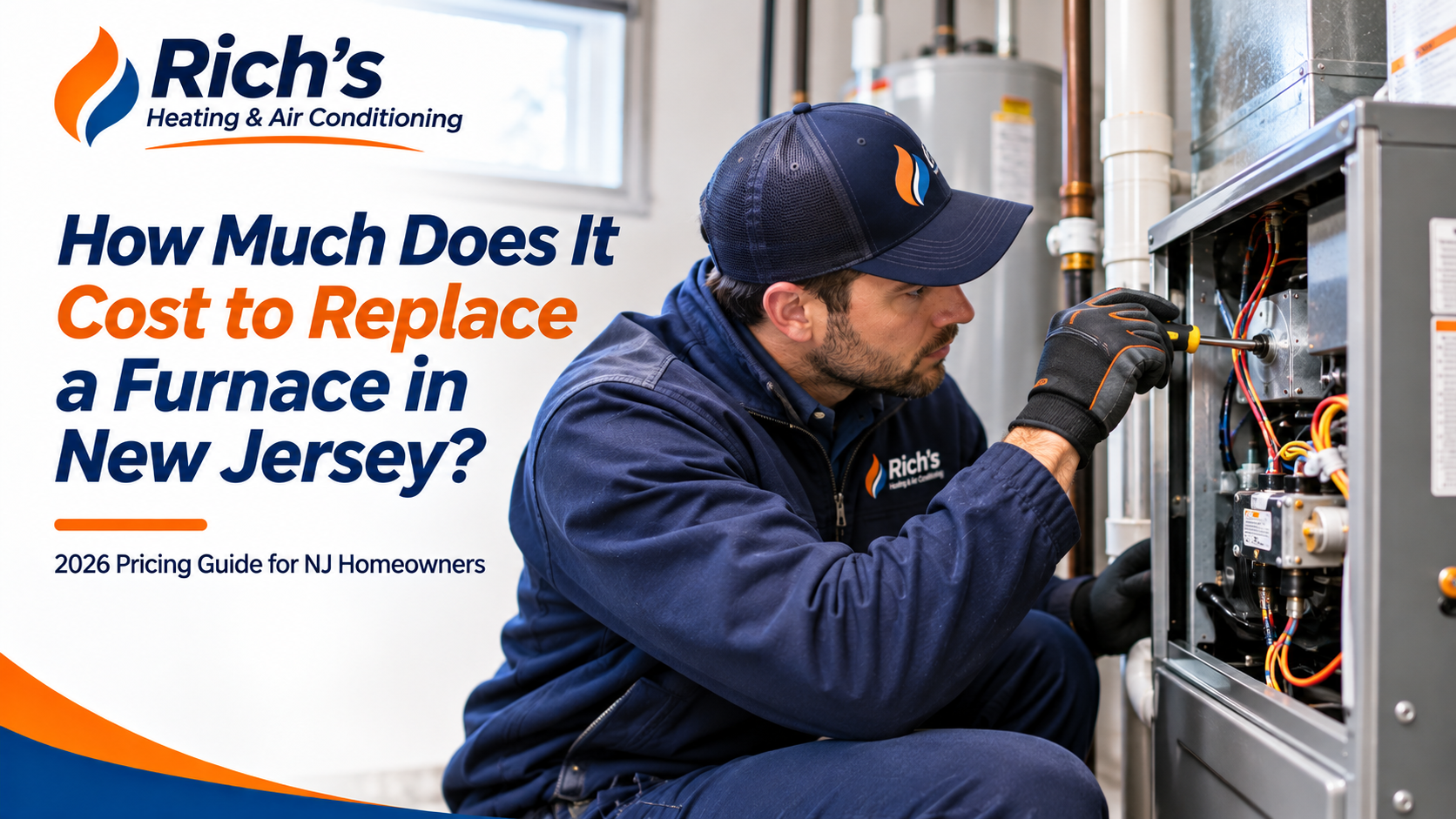 First, Is It Really Cold Air?
Before you start troubleshooting, it helps to confirm that the air is actually cold and not just slow to warm up. Some cool air at the start of a heating cycle is normal, because the air already sitting in the ductwork has to clear before heated air reaches the registers. Giving the system a few minutes to run usually tells you whether you are dealing with a normal startup or a real problem. The three situations below can help you sort out which one you have.
Normal: Cool air lasts only a minute or two, then turns warm.
Possible issue: The air stays cold after roughly 10 minutes, the furnace runs constantly, or warm air turns cold in the middle of a cycle.
Safety issue: There is a gas odor, a burning smell, water near the furnace, repeated shutdowns, or a carbon monoxide alarm sounds.
If you notice any of the safety signs, stop troubleshooting and leave the home first if there is a gas odor or a carbon monoxide alarm is sounding. Once you are safe, emergency heating repair is the right next call, and this guide on what counts as an urgent HVAC call in New Jersey can help you judge the rest.
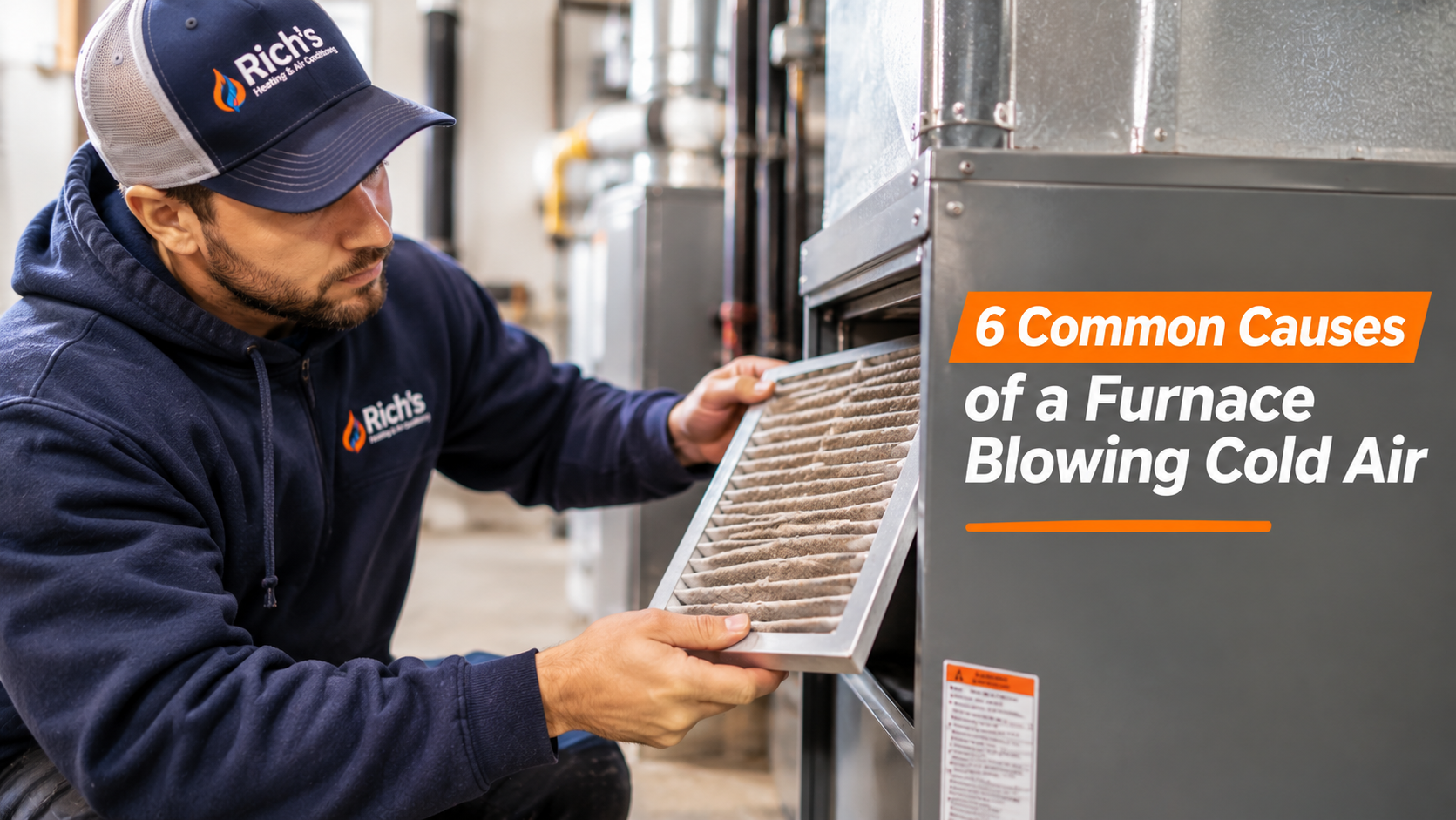 6 Common Causes of a Furnace Blowing Cold Air
A furnace that runs but does not heat usually points to one of a handful of problems. Some are simple settings or maintenance issues that a homeowner can safely check, while others involve gas, ignition, or electrical parts that belong to a licensed technician. The first three causes below are the easiest to check, and the last three are more likely to need professional help. Each one explains why it leads to cold air, what you can safely try, and when it is time to stop and call for help.
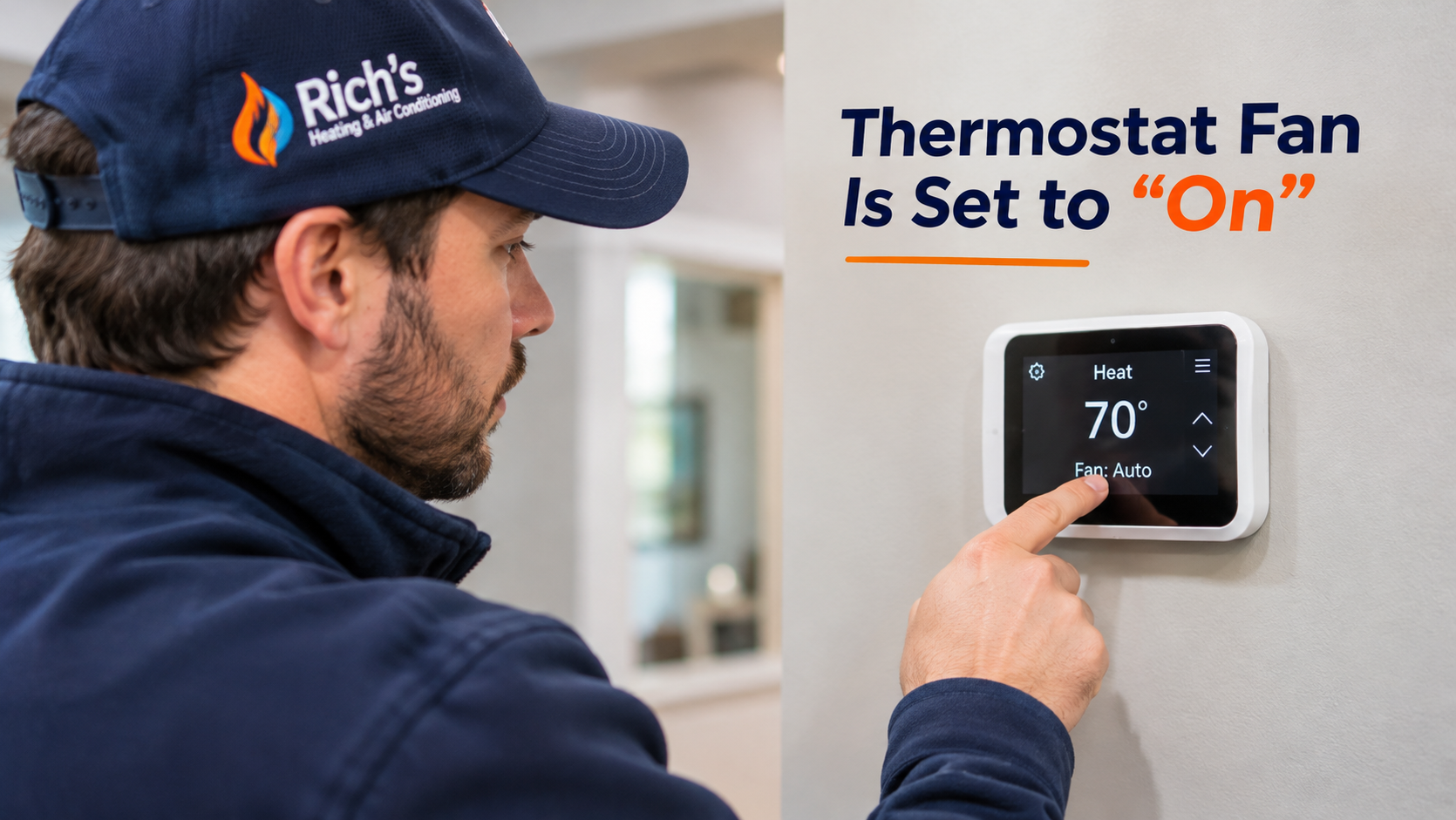 1. Thermostat Fan Is Set to "On"
The thermostat fan setting controls whether the blower runs only when the furnace is heating or all the time. When the fan is set to "On," it circulates air continuously, even between heating cycles when the furnace is not producing heat. That moving air can feel cool coming out of the vents, which makes it seem like the furnace has failed. Setting the fan to "Auto" lets the blower run only when the thermostat calls for heat.
Safe check: Confirm the system is set to "Heat," raise the setpoint above the room temperature, and switch the fan from "On" to "Auto." Our guide to the best thermostat settings for New Jersey winters can help you choose settings that keep the house comfortable without wasting energy.
Call a pro if: The thermostat will not respond, or the display stays blank after you replace the batteries. A thermostat that still behaves incorrectly after these steps may have a wiring or control issue that needs a technician.
2. Dirty or Clogged Air Filter
An air filter traps dust and debris so it does not build up inside the furnace and ductwork. When the filter becomes clogged, it restricts airflow, and the furnace can overheat as a result. To protect itself, the furnace has a high-limit safety switch that shuts off the burners when temperatures climb too high. The blower often keeps running during this shutdown, which is why the air coming out of the vents feels cool.
Safe check: Turn the system off before you remove the filter, then hold it up to a light. If very little light passes through or the filter looks gray and dusty, replace it with the correct size and type.
Call a pro if: The problem returns soon after a filter change, airflow stays weak, or the furnace keeps shutting down. Routine HVAC maintenance can catch airflow problems like these before they lead to a shutdown.
3. Blocked Vents, Returns, or Airflow Restrictions
Airflow depends on air moving freely out of the supply registers and back in through the return grilles. Closed registers, furniture blocking a return, or an obstructed duct can choke that flow. The result looks a lot like a dirty filter, with the furnace overheating and shutting off its burners while the blower keeps running. Because these problems are so easy to overlook, they are worth checking before anything else on the list.
Safe check: Open any closed supply registers and make sure rugs, furniture, curtains, or stored items are not blocking the return grilles. Bryant's furnace troubleshooting guidance lists these same airflow checks among the first steps to try.
Call a pro if: Several rooms stay cold, airflow is weak throughout the home, or the ductwork looks disconnected or damaged. In homes with uneven heating, a zoned HVAC system may be worth discussing with a technician.
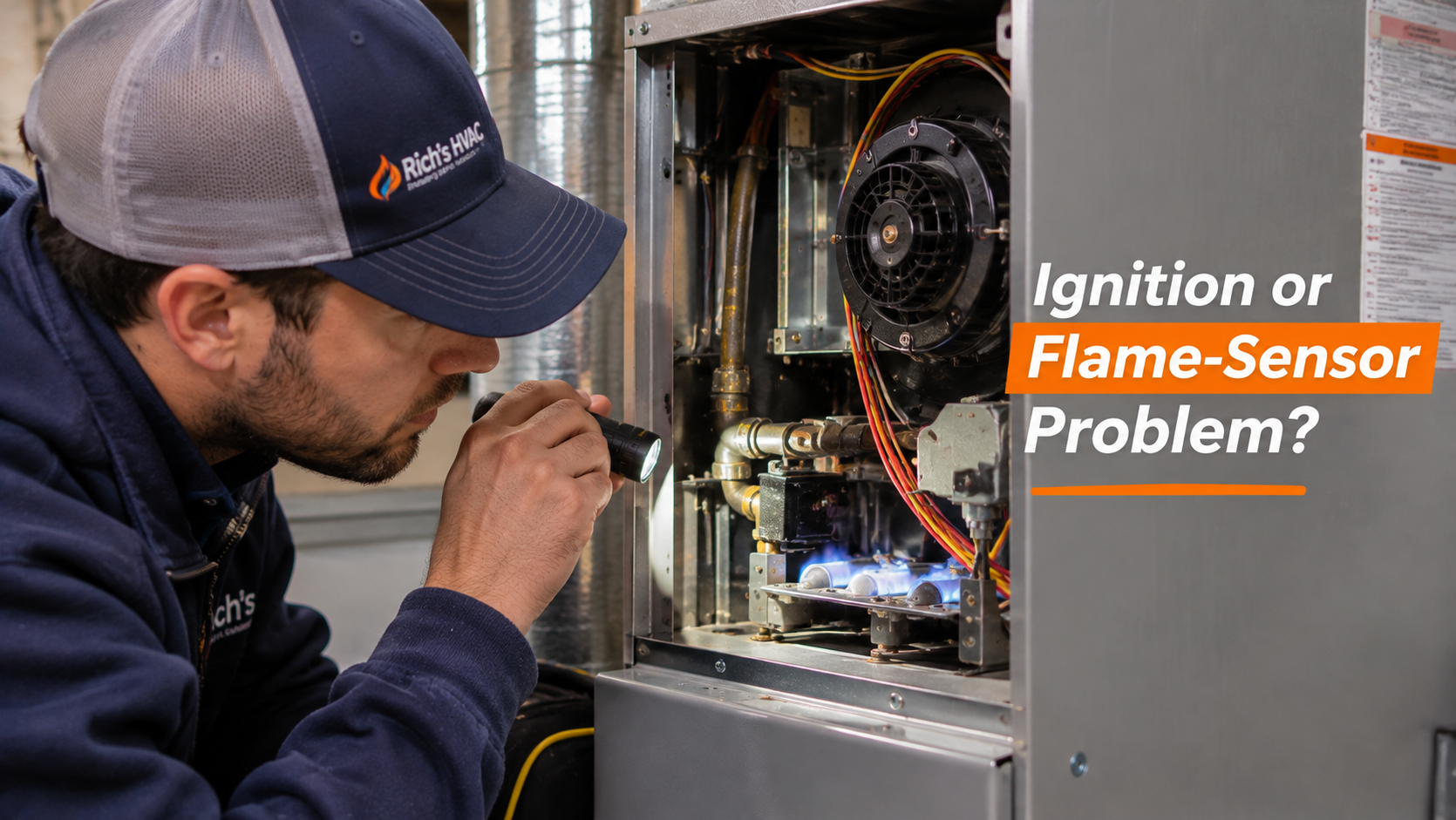 4. Ignition, Pilot Light, or Flame-Sensor Problem
A furnace needs a working ignition system to light its burners, and the blower can still run even when the burners never ignite. In older furnaces with a pilot light, a draft, a dirty valve, or a faulty thermocouple can put the flame out. Newer systems use a flame sensor, a safety component that confirms the burners are lit, and a dirty sensor can make the furnace shut off the gas. Either way, the blower keeps pushing unheated air through the vents.
Safe check: Do not disassemble the furnace, clean the flame sensor, or relight a pilot unless the manufacturer's instructions specifically tell homeowners to do so. Instead, note whether the furnace tries to start, clicks, flashes an error code, or starts and then quickly shuts off.
Call a pro if: The burners do not light, a flame sensor may be dirty, the igniter looks damaged, or the furnace cycles on and off. Because these repairs involve gas and combustion parts, they should be handled by a qualified technician through HVAC repairs, and this breakdown of furnace repair costs in New Jersey shows what the work often involves.
5. Gas Supply or Condensate-Drain Problem
A gas furnace needs an adequate fuel supply to produce heat, so a closed gas valve or a supply problem can leave the burners without fuel. High-efficiency condensing furnaces, such as the 95% models in this 80% vs. 95% furnace comparison, add another factor because they rely on a condensate drain to carry away the water produced during heating. If that drain line clogs, the furnace can stop the burners from running. In either case, the blower may still run, which leaves you with air that never warms up.
Safe check: If you can see an exterior gas valve, confirm the handle is parallel to the pipe, but do not force or adjust a valve you are unfamiliar with. For propane homes, check the tank gauge if it is safely accessible, and look only for obvious kinks, standing water, or blockage near the condensate line without taking anything apart.
Call a pro immediately if: You smell gas, hear hissing, see water collecting near the furnace, or suspect a fuel supply problem. If there is a gas odor, leave the home and contact the gas utility or emergency services from a safe location.
6. Leaky or Damaged Ductwork
Sometimes the furnace is producing heat, but the ductwork is losing it before it reaches your rooms. Leaks, disconnected sections, or damaged ducts in an attic, crawl space, or basement let warm air escape into spaces you do not heat. By the time the air reaches the registers, it can feel cool or only lukewarm. Older New Jersey homes with aging duct systems tend to notice this more once winter arrives.
Safe check: Notice whether certain rooms are consistently colder than others, whether airflow is weak at the registers farthest from the furnace, or whether the problem is worse in one part of the house. Write down what you find, because it helps a technician narrow down the problem faster.
Call a pro if: Multiple rooms stay cold, energy bills rise, or the ducts you can reach look visibly damaged. Duct sealing and repair need a professional assessment, and a regular residential HVAC maintenance visit is a good time to have the ductwork looked at.
 Safe Homeowner Checklist for a Furnace Blowing Cold Air
If your furnace is blowing cold air, working through a short checklist in the right order can solve the problem or at least narrow it down. Each step below is safe for a homeowner and does not involve opening the furnace or touching gas or electrical parts. This guide on how to troubleshoot when your heat doesn't work is a useful companion to this list. Stop at any point if something seems unsafe or beyond what you are comfortable checking.
Set the thermostat to Heat and raise the temperature above the current room temperature.
Change the fan setting from On to Auto.
Inspect the air filter and replace it if it is visibly dirty, using the correct size and type.
Open any closed supply vents and clear furniture or rugs from the return grilles.
Check that the furnace power switch is on and the breaker has not tripped.
Give the system several minutes after startup before assuming it is malfunctioning.
Stop troubleshooting and call a licensed HVAC professional for ignition, gas, electrical, water, or recurring safety-shutdown problems.
Most of these steps take only a few minutes, and the first four cover the most common causes. If the furnace is still blowing cold air after step six, it is time to hand the problem to a technician.
Quick Symptom Guide
Not every cold-air problem looks the same, and the symptom you notice can point toward the likely cause. The table below matches common symptoms with the most likely cause, a safe action, and the point where a technician should step in. Use it as a starting point rather than a diagnosis, since several causes can look alike. A technician can confirm what is actually happening inside the system.
When to Call an NJ HVAC Professional
Basic checks can solve many cold-air problems, but some situations need a trained technician. Gas valves, ignition components, control boards, and heat exchangers are not parts a homeowner should repair, and attempting it can create real safety risks. Knowing when to stop protects both your family and your furnace. Call a qualified HVAC technician when any of the following apply:
-The furnace blows cold air for more than about 10 minutes after startup.
-The burners will not light, or they shut off soon after ignition.
-The filter is clean, but the furnace still overheats or shuts down.
-There is water near a high-efficiency furnace or a suspected condensate blockage.
-The system displays an error code, makes unusual noises, or repeatedly trips a safety control.
-There is a gas odor, an electrical burning smell, or a carbon monoxide alarm activation.
If your furnace is older and the repairs keep adding up, this guide to deciding between repair and replacement and this advice from a New Jersey HVAC tech can help you weigh your options. When you are ready to have the system looked at, you can contact our team and describe what you are seeing.
New Jersey Safety Context
A furnace that blows cold air is a comfort problem, but gas-fired heating equipment also carries safety risks that every New Jersey homeowner should understand. The New Jersey Department of Community Affairs advises annual cleaning and inspection of heating equipment and chimneys by a certified professional, along with proper venting of fuel-burning equipment. It also stresses the importance of working carbon monoxide alarms in the home. These habits matter most during the heating season, when furnaces run for long stretches.
-Carbon monoxide is colorless and odorless, so working alarms near sleeping areas and on every level of the home are essential.
-Gas-fired heating systems can be a source of carbon monoxide.
-Never use an oven, grill, camp stove, or generator to heat a home.
-Keep exterior vents, intakes, and exhausts clear of snow and debris.
-If a carbon monoxide alarm sounds, or anyone has symptoms such as headache, dizziness, nausea, or fatigue, leave the home and call for emergency help from a safe location.
Snow and ice can block exterior vents and intakes, which is why this carbon monoxide warning from the New Jersey Poison Information and Education System is worth reading before a storm hits. Even a furnace that seems to be working normally should be inspected every year, since a cold-air problem is not the only thing a technician checks.
Furnace Cold-Air Problems in New Jersey Homes
New Jersey's heating season puts furnaces under steady demand, and cold snaps tend to expose problems that went unnoticed in milder weather. Older homes may have aging ductwork or equipment that becomes more noticeable once the furnace runs for long stretches. High-efficiency condensing furnaces add their own concern, because condensate drain issues do not affect simpler systems. Age matters too, and this post on how long a furnace lasts in NJ can help you judge whether a recurring problem points to a system near the end of its life.
New Jersey regulates furnace work through its HVACR licensing framework, and gas and propane related services have their own licensing and certification requirements under the state's HVACR licensing law. Confirming that a contractor holds the right credentials before any furnace work begins is a simple way to protect your home.
We provide furnace repair and heating maintenance in Dunellen, Elizabeth, Plainfield, and nearby communities, including Metuchen, Old Bridge, New Brunswick, East Brunswick, South River, Cranbury, and North Brunswick. You can see the full list on our service areas page.
Furnace Blowing Cold Air FAQ
These are some of the questions homeowners ask most often when a furnace starts blowing cold air. Each answer is short on purpose, so you can find what you need quickly. If your question is not covered here, the FAQ page on our site may help. For anything involving gas, ignition, or safety shutdowns, a technician is the right person to ask.
Why is my furnace blowing cold air?
Common reasons include a thermostat fan set to "On," a dirty air filter, blocked airflow, ignition or flame-sensor trouble, gas or condensate-drain issues, and leaking ductwork. Start with thermostat and filter checks, then contact an HVAC professional if the problem continues.
Why does my furnace blow cold air at first?
Some cool air during startup can be normal while residual air in the ducts clears and the furnace begins producing heat. If the air remains cold after several minutes, investigate further.
Should I set my furnace fan to "On" or "Auto"?
For most homes, use Auto. The "On" setting runs the blower continuously, which can make vents feel cool between heating cycles.
Can a dirty filter make a furnace blow cold air?
Yes. Restricted airflow can cause the furnace to overheat and trigger a safety shutdown, leaving the blower running without heated air.
When should I call an HVAC technician in NJ?
Call a qualified technician if cold air persists after basic checks, the burners do not light, the system repeatedly shuts down, there is water near the furnace, or you smell gas. You can also read more about the team behind our service before you call.
Can a heat pump blow cold air in winter?
Yes, a heat pump can blow cooler air briefly during a normal defrost cycle, which is different from a furnace problem. If you have one, this post on how heat pumps perform during New Jersey winters explains what to expect, and our overview of residential heat pump services covers when a technician should take a look.
Final Thoughts on a Furnace Blowing Cold Air
A furnace blowing cold air is usually caused by something manageable, such as a thermostat setting, a dirty filter, or a blocked vent. Starting with those simple checks can restore heat quickly and help you avoid an unnecessary service call. When the cause involves ignition, gas, electrical parts, or repeated safety shutdowns, handing the problem to a professional is the safest choice. Reliable furnace repair in NJ is worth lining up before a cold snap, not in the middle of one.
If repairs are becoming frequent, it may be worth comparing your options, starting with this furnace vs. heat pump guide for New Jersey homes and a look at what furnace installation typically costs in New Jersey. Some homeowners may also qualify for incentives, and this post on HVAC rebates for New Jersey homeowners in 2026 explains what to look for.
Whether you are dealing with a furnace blowing cold air right now or planning ahead for next winter, the right information makes the next step easier. You can learn more about our work on the HVAC contractor page or see examples on our recent projects page.
Furnace still blowing cold air? Our NJ HVAC technicians can diagnose the issue and restore reliable heat. Schedule furnace repair today at (732) 433-0068.
Need routine maintenance before the next cold snap? Ask about our heating tune-up and furnace maintenance services.
Comments